Over the past year, my partner and I have dipped our toes into the homesteading waters with a small flock of chickens, an admittedly chaotic garden, and a barn build project that we have just wrapped up. As the productive season winds down, we are shifting into maintenance mode, and saving our list of projects for next spring. That is, except for sheep.
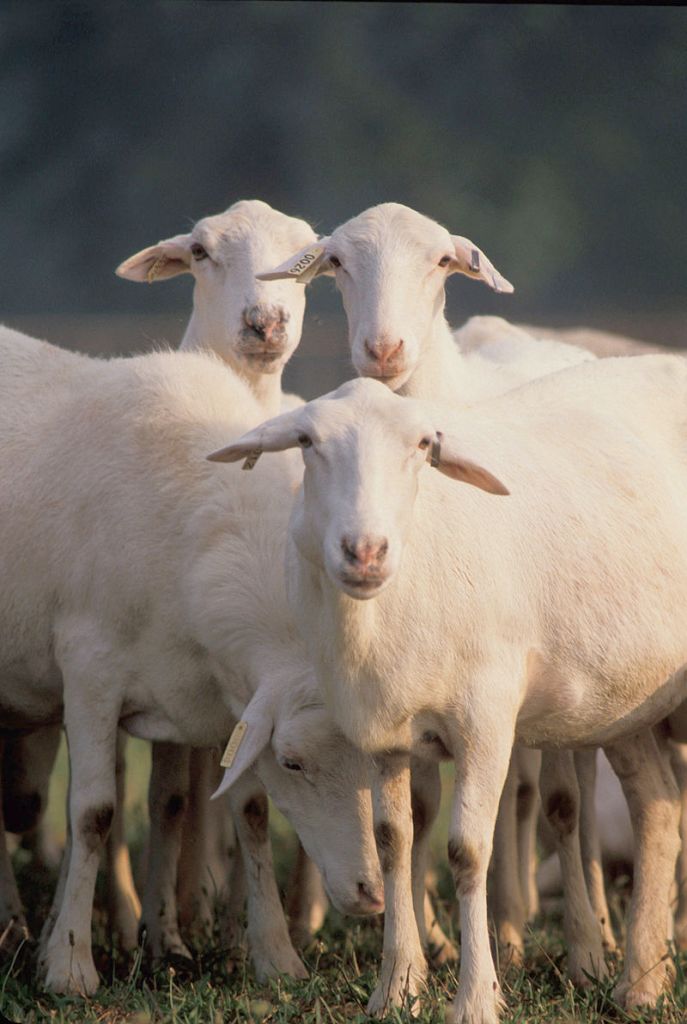
A neighbor of ours has been raising St. Croix sheep for a couple of years, and was kind enough to offer pair of them to us this past summer. Fast forward a few months, and it’s now breeding season, which means that once the sheep have spent a couple days mixed in with the rams, they’ll be heading our way. I’ve spent the last month putting together their enclosure, with the goal of frugally sourcing as many supplies as I can.
Electric Fence
The projected costs of fencing made up the biggest portion of my start up costs. Thankfully, I was able to source fencing, an energizer, and a battery from my mother, who had a setup leftover from a small goat herd she’d kept the year before. With the goats out of the picture (they now live on a farm down the road from my mother — not to be confused with the proverbial farm upstate!) the fencing was sitting unused, and my mother happily traded it to us in exchange for some help with a plumbing project. Between the two rolls of electric netting ($250 for both), the energizer ($102), and the battery ($129), I was able to shave nearly $500 off my startup cost. I did still have to order a battery charger, but at $46 it was less than 10% of what I would’ve spent on new fencing.
Shelter

This had the potential to be another big ticket item on the startup cost list. Fortunately, thanks to our barn build and a couple of other carpentry projects, we had plenty of scrap wood lying around. I drew up a plan for a small 3.5-sided shed based on what we had in the lumber pile. The finished result is quite sturdy, and should be suitable for our initial flock of two.
I wasn’t able to find a good market equivalent of this homemade structure, so it’s hard to say what I would’ve spent had I not built it myself. The materials — 2 sheets of T-111, some self-cut 2x2s, and a couple pieces of steel roofing — would have been around $160 if I had had to purchase them. By using scrap from our other building projects, I was able to reduce the cost to around $10, as I did need to by a box of exterior screws. But $10 is a lot closer to $0 than it is to $160, so I certainly won’t complain…
Food and Water
The rest of my startup costs were spent — or rather, were projected to be spent — on food, water, and related supplies. I was able to score a 50 gallon stock tank from my dad, who had used it as a pond for my step-mom’s ducks. The ducks have since been rehomed with our next-door neighbor, and as payment for transporting them to their new home, I requested the now-empty stock tank. A new tank with the same volume retails for $110. The only cost I incurred for the sheep’s water setup was a 250-Watt stock tank de-icer, which cost me $32.
The biggest expense I actually encountered was in buying hay — our winters are long and snowy, and while sheep are adept winter foragers, I wasn’t sure they’d be able to dig up enough grass. I know a hay farmer who operates a few towns north of us, so I bought 30 bales of second cut from him to ensure the sheep would have plenty of feed throughout the winter. At $5 a bale, this came out to be $150, my largest up-front expense. In addition to the hay, I purchased a mineral block for $20.
All in all, my startup expenses came out to $250, compared to a cost of $850 had I bought everything new. I’m quite pleased by the amount I was able to save, and look forward to spending the difference on expanding my sheep operation next year. Though perhaps I should wait for my first two sheep to arrive before I focus on that…
-G
 Agricolyte